Multimodal patient data into structured records, without building an ML team.
Notes, imaging, genomics and claims arrive in different shapes and describe the same people. Turning them into one structured, analysis-ready record is the capability that separates the largest real-world data platforms from everyone competing with them. We build that layer as software you run on your own infrastructure, so a mid-market team can automate that construction without a nine-figure engineering program.
Sihang Zeng, our CTO, worked on clinical foundation models at Truveta before starting Norm Labs.
Every real-world data team already runs these three stages, mostly by hand.
The largest platforms replaced the manual version of each stage with a learned one, which is where their margin and their consistency both come from. Smaller teams run the same three stages with abstractors and hand-maintained crosswalks. We build the learned version as software you deploy yourself.
Extraction
Pulling structured facts out of clinical notes, scanned documents, lab reports and sponsor PDFs.
Normalization
Mapping local codes, units and vocabularies onto a shared representation.
Assembly
Deciding which records belong to the same person, in what order events occurred, which of two conflicting values is right, and when to decline to answer. This is the stage that stays manual longest. Norm uses your patient tokens where sources carry them and infers identity where identifiers were stripped.
Norm Labs is not a data marketplace, a chart-retrieval service, a study-design platform or an analytics application. It is the construction layer your data products run on.
The work between ingestion and delivery is still done by hand.
What they built in-house
- Truveta, ConcertAI and Flatiron automated this work internally. They sell the data it produces, not the layer itself.
What it costs to keep doing it by hand
- $10 to $20
- per record for outsourced abstraction, sitting directly in cost of goods sold and scaling linearly with every new source you take on.
- $1M+
- for a typical abstraction engagement at a mid-size vendor.
Construct once. Derive fit-for-purpose datasets from it.
Construction runs once per patient. Projection reshapes that record into the schema each study or customer delivery needs, with every transformation explicit and provenance attached.
Scroll the diagram sideways to see the full flow.
Timeline construction
Runs once per patient, independent of any model. Unstructured sources are routed to an extraction model, already-structured sources are recognized and passed through. Codes, units and vocabularies are normalized, then events are ordered, deduplicated and resolved into a single canonical stream that every downstream consumer reuses.
Projection
Runs per request, shaped to whichever model is asking. The canonical timeline is reprojected into the schema an analysis requires, with provenance attached to every output.
Evaluation
Synthetic environments are built ground truth first. A clean master record is degraded into source views with every operation logged, so the answer key is generated by diffing. That makes identity resolution, abstention calibration and temporal alignment scoreable instead of asserted.
Deployable in your environment. Patient records stay with you.
Real-world data companies are their data asset. Any tool that requires shipping records to a third party is a tool most of them cannot buy, whatever it does.
On premise
Deployed inside your environment and run by your team. Patient records never leave your infrastructure and we never take custody of them.
Priced on volume
Pricing follows the data volume you process, so cost grows with the sources you onboard. No seats and no platform fee.
Bring your own extraction
If a source is unstructured, the system calls an extraction model. If your pipeline already extracted it, the framework recognizes that and starts from there.
Our founding team

Harrison Martel
Chief Executive Officer
Harrison leads strategy, partnerships and commercial development at Norm Labs. His academic background spans computer science, applied mathematics and statistics, and business at Johns Hopkins, where he has contributed to research applying deep learning to genome editor and nanoparticle optimization challenges. He has contributed to the deployment of clinical NLP for trial patient identification.
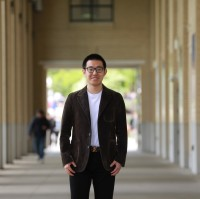
Sihang Zeng
Chief Technology Officer
Sihang leads research and the design of the construction and evaluation stack. His work spans longitudinal EHR modeling, clinical language models and evaluation frameworks for healthcare AI, including multi-agent systems for temporal reasoning over patient trajectories. He trained in biomedical informatics at the University of Washington and in electronic engineering at Tsinghua University, worked on clinical foundation models at Truveta, and is a postdoctoral fellow at Harvard Medical School.
If your team rebuilds source mappings by hand every release, we should talk.
Scope a benchmarkThe first engagement runs on synthetic data. No patient data, no DUA, no IRB.